hello people. i thought a little about agentic-agentic things around, and decided to share a few thoughts on the subject, particularly regarding user experience
it is the middle of 2026
..so MCP first?
there are a million ways of combining tools into workflows, so it makes sense to make a product convenient to use as a tool in a worldwide-toolset
would you prefer to manually work with each platform-specific agent in a trillion tabs? i don’t!
and user agents should be able to work with many agents in tandem!

classic “user experience” must pay rent
each part of the system costs. if our UX can’t compete with MCP-like-ways-of-working, why should it exist in the first place? the way for it to compete is to be exceptional
text is not a silver bullet
with the recent success of the chat-with-LLM products, i’m worried about a tendency to put everything in the chat & text format. some things are just much easier to express with touch gestures, swipes, clicks -- interactions
it would be great as a company to invest in a rich ecosystem of interaction experiences
we can learn so much from the game development industry here!
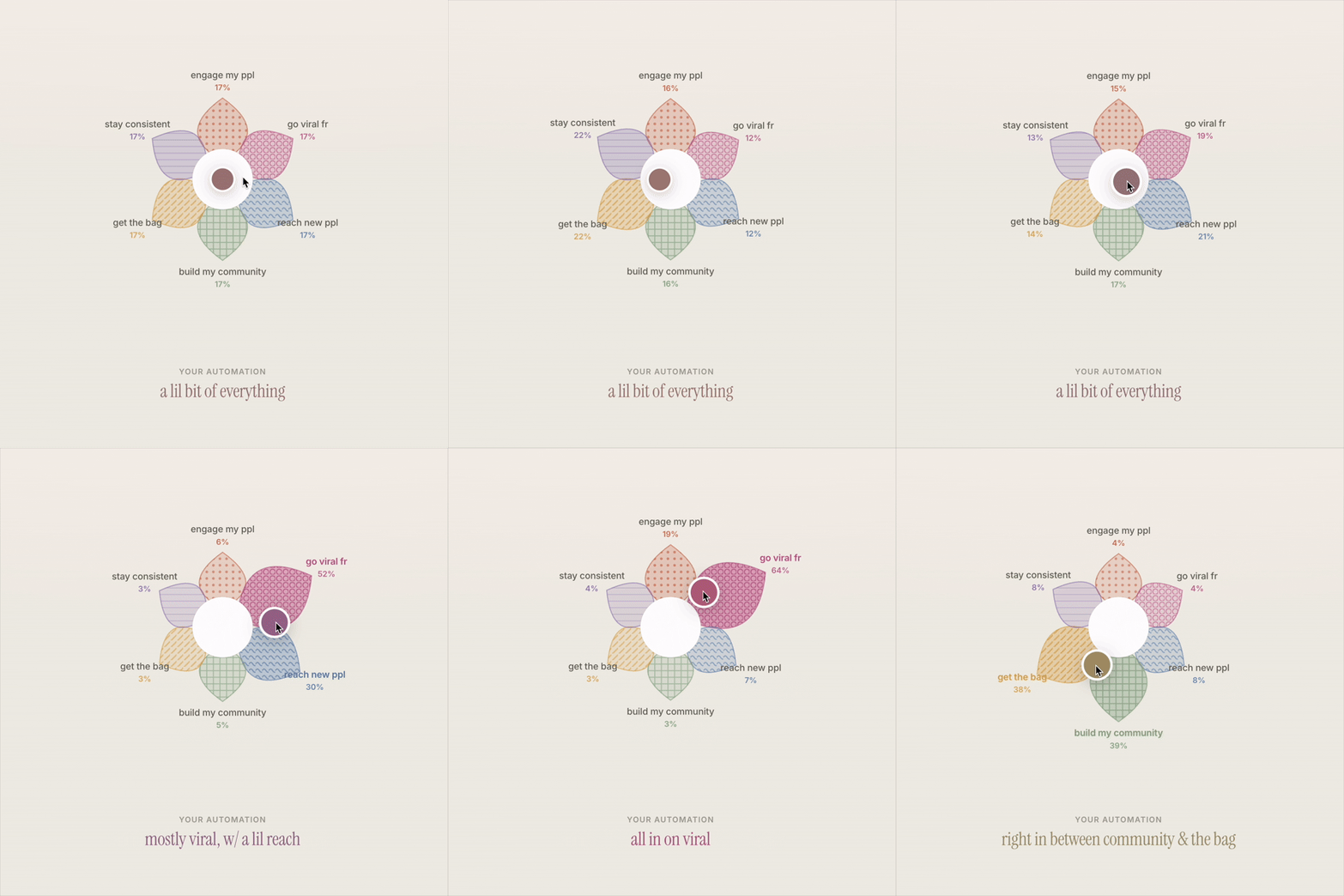
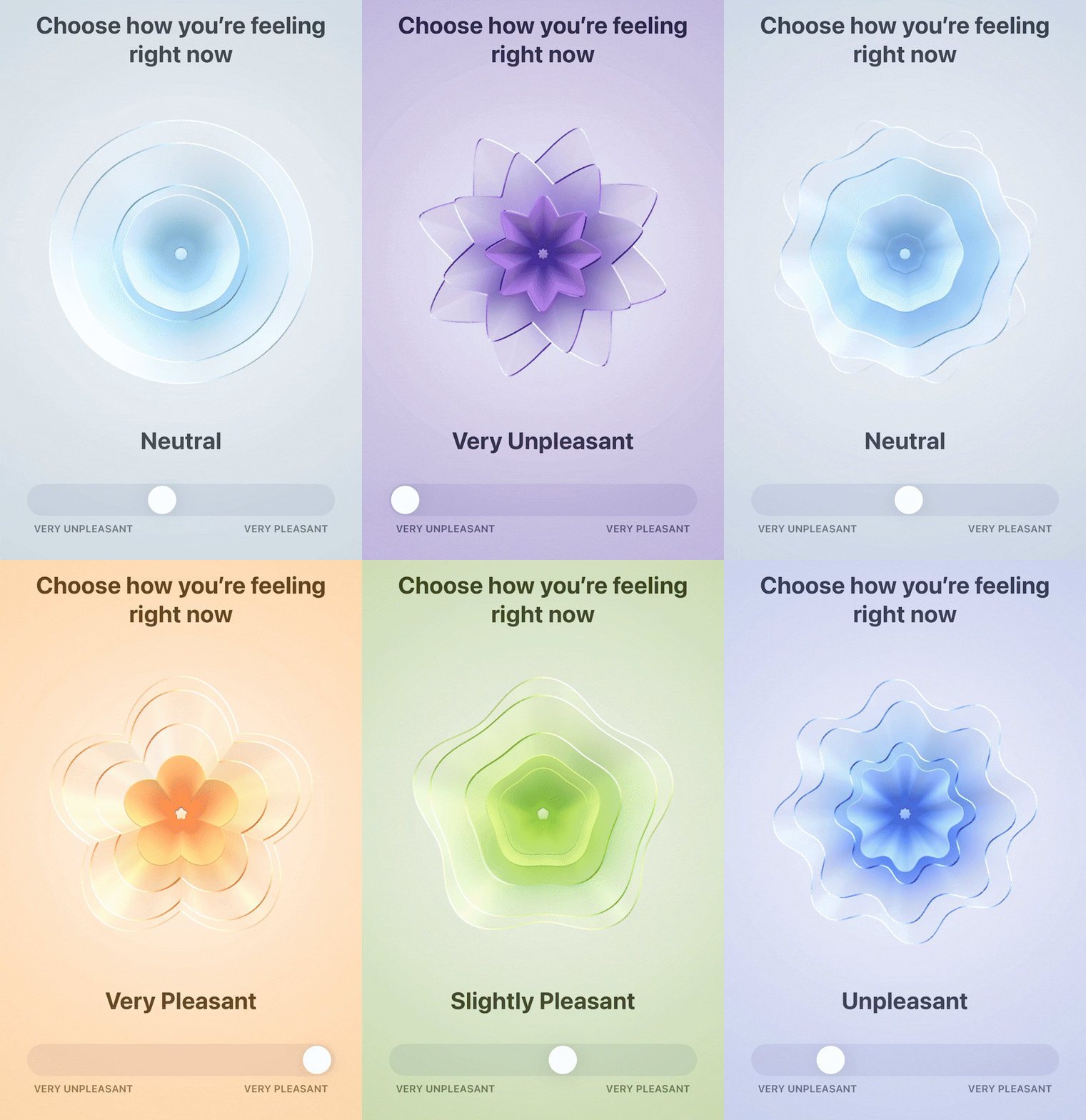
morph-ish interfaces
think of an interface that builds before your eyes, layer by layer. to make it feel right, the “brain” part of the system should constantly communicate partial information about the expected result to the “interface” level, to allow it to guess appropriate skeletons of the upcoming content. the interesting part is that the prediction might be wrong!
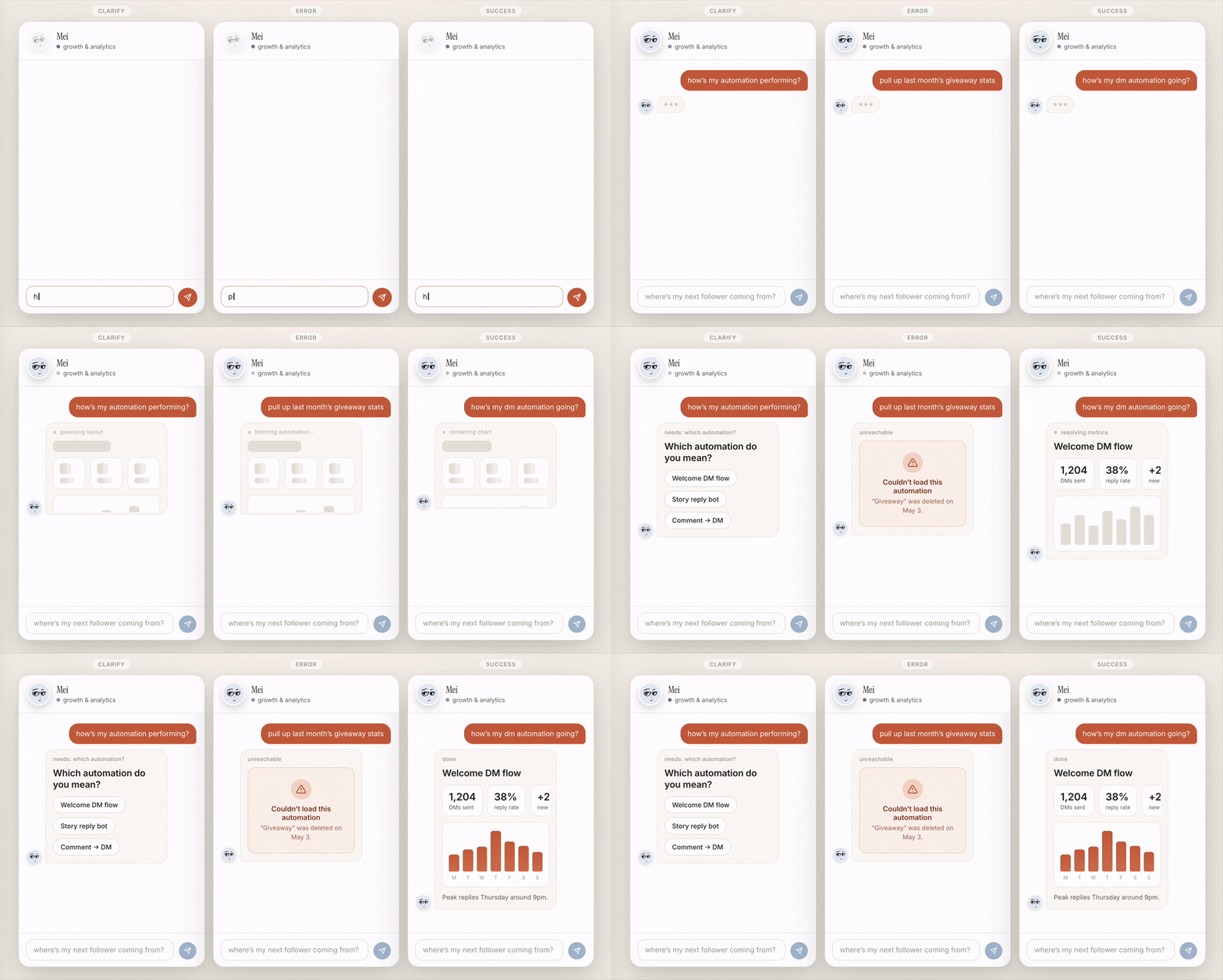
for example, the system “thought” that it would present results of the recent automation, but suddenly, it realized that the automation was deleted/corrupted/basically unreachable -- and so the morph-ish interface should adapt on the fly to that, and should not pretend that the previous interface never happened via some 180-degree turn in terms of what’s rendered (e.g. from rectangle-ish placeholder to text in a blink, no-no-no)
from my POV, it serves the idea of creating a continuous dialogue between person and application (and to compensate for the long-thinking process of the model)
agent for “now” moment
there are tons of ways to adjust LLM’s output and style. i like how Cursor solved it simply, via select-box of predefined modes -- plan, agent, ask, etc; and during the day i switch between them constantly!
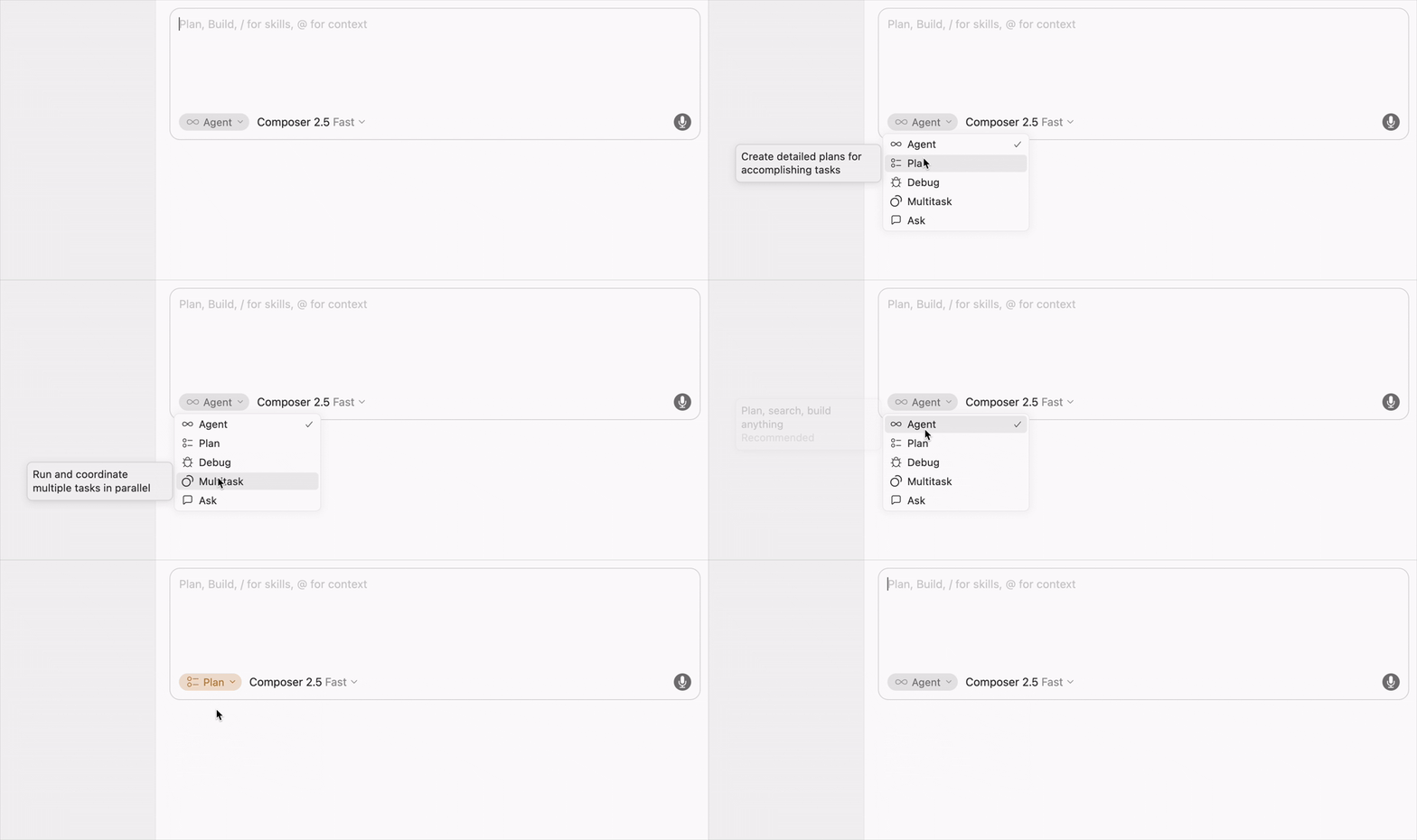
as a creator, in the morning i might want a lazy & concise overview of what’s up online across my profiles, and agent Eric nails it
in the evening i want to work on growth -- agent Mei is best for that -- often reaches internet broadly, calculates precisely, almost never makes mistakes; costly tho
and at night it is the creative phase -- time for Muse agent -- high temperature, dreamy, novel
and many others -- Ralph for loopy stuff, Atlas for knowledge, HAL..
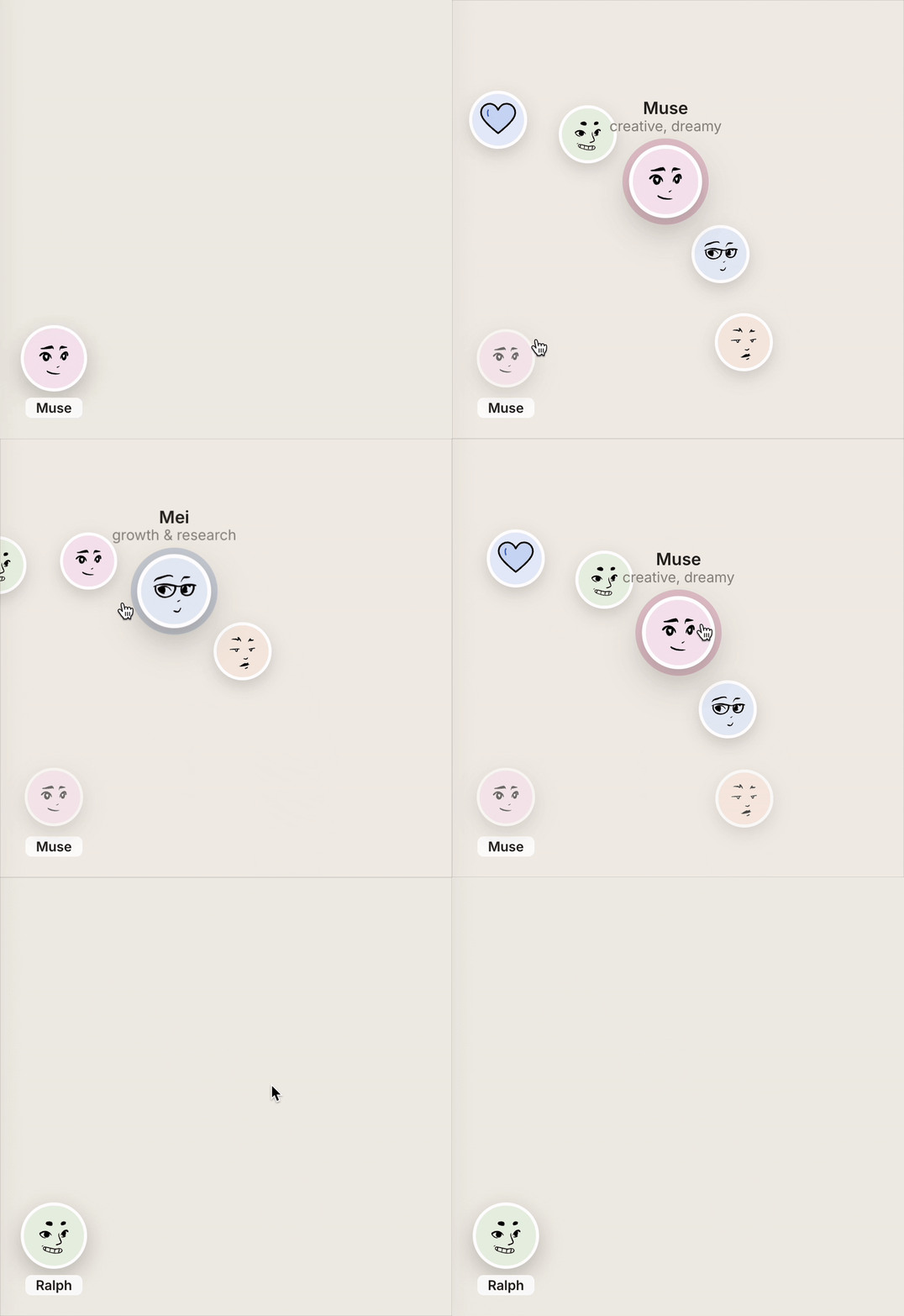
one day systems will be universal enough and one agent will rule them all. until then, it should be easy and cool to choose between them, or they could choose themselves
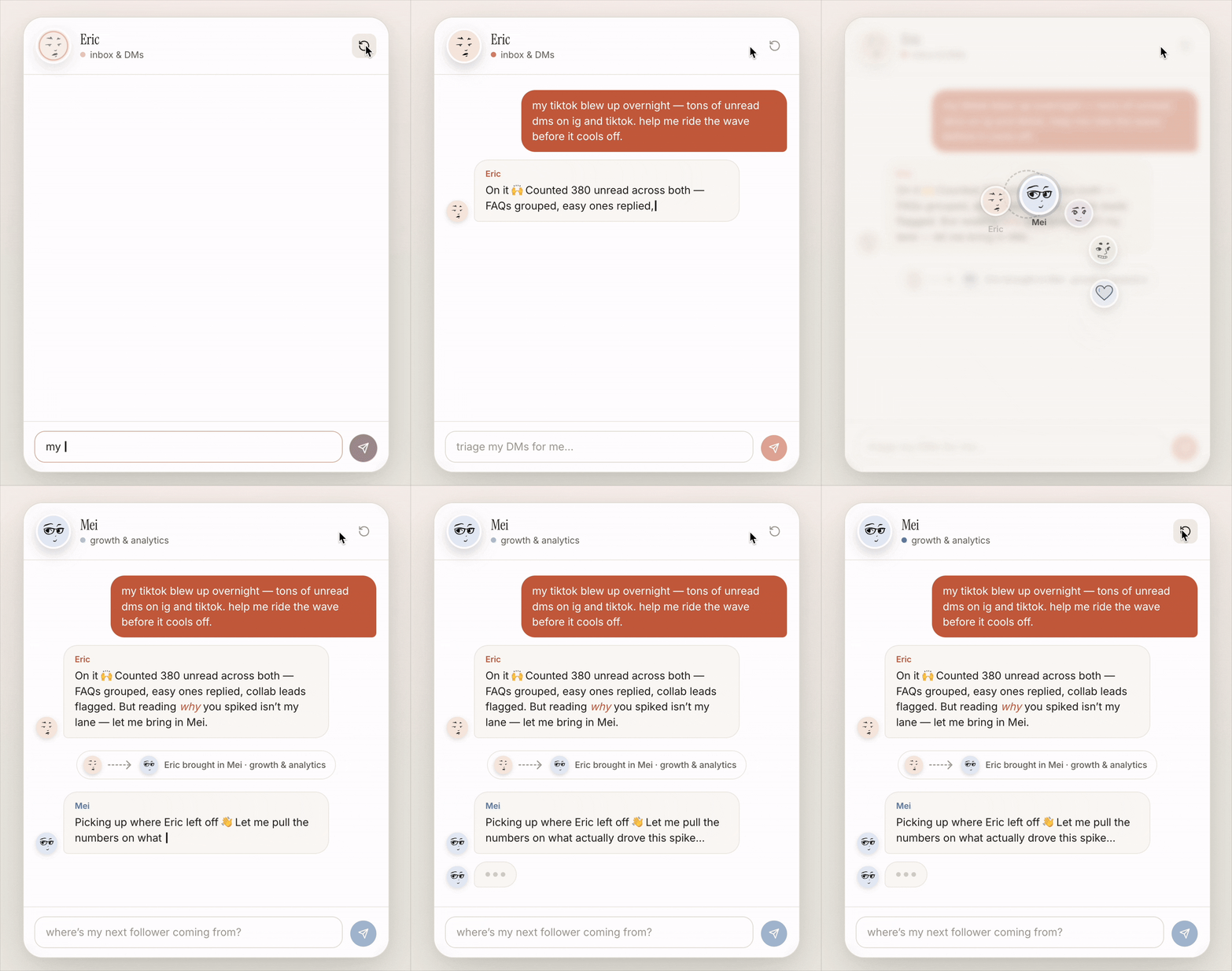
the same principle should be applied to agents that work in user “fields” -- replies, DMs, broadcasts -- different context different hero, relying on each other during the whole game
with these in mind, i also think it’s quite a pragmatic paradigm to go with in early-stage, both from a product and engineering thinking, simply because u have narrower focus to execute with each specific agent
reactive to feedback
providing feedback should be super rewarding:
a nice warm vibration of the device, a pleasant sound, discount on subscription, invitation to an interview or to early adopters group
and with chat, we can recognize feedback much more proactively -- by looking for gratitude/thankfulness signals in history of user interactions with our agents
people directly tell us what they want/what they don’t
isn’t that the number one thing that they could give us?